A Monday briefing on peptide and bioregulator research, FDA and international regulatory actions, and clinical-trial activity. Research-use products are not FDA-approved medicines.
Executive Summary
The week’s main U.S. regulatory item concerns approved medicines. In a November 9, 2026 Drug Safety Communication, the U.S. Food and Drug Administration said it is requiring application holders for all approved glucagon-like peptide-1 receptor agonist (GLP-1 RA) medicines to add a warning about a potential increased risk of a rare optic-nerve condition, non-arteritic anterior ischemic optic neuropathy (NAION). The action applies to FDA-approved drugs. It is not an assessment of research-use compounds.
The public comment period on the U.S. Department of Health and Human Services’ draft enforcement-discretion policy for section 503A compounding with six peptides (BPC-157, Epitalon, KPV, MOTS-c, Semax, and TB-500) closed on November 13, 2026. The public docket shows 115 posted comments. In the final days, the American Medical Association urged HHS to rescind the policy, the Endocrine Society joined a clinician letter opposing it, and two pharmacy associations supported it while asking for tighter sourcing safeguards. These are stakeholder positions, not government decisions. HHS has not announced its next step.
On the research side, peer-reviewed phase 3 results were published for two investigational incretin-based medicines, CagriSema and retatrutide, and a CDC survey estimated that about one in five U.S. adults who used a GLP-1 medication in the past year took a compounded version.
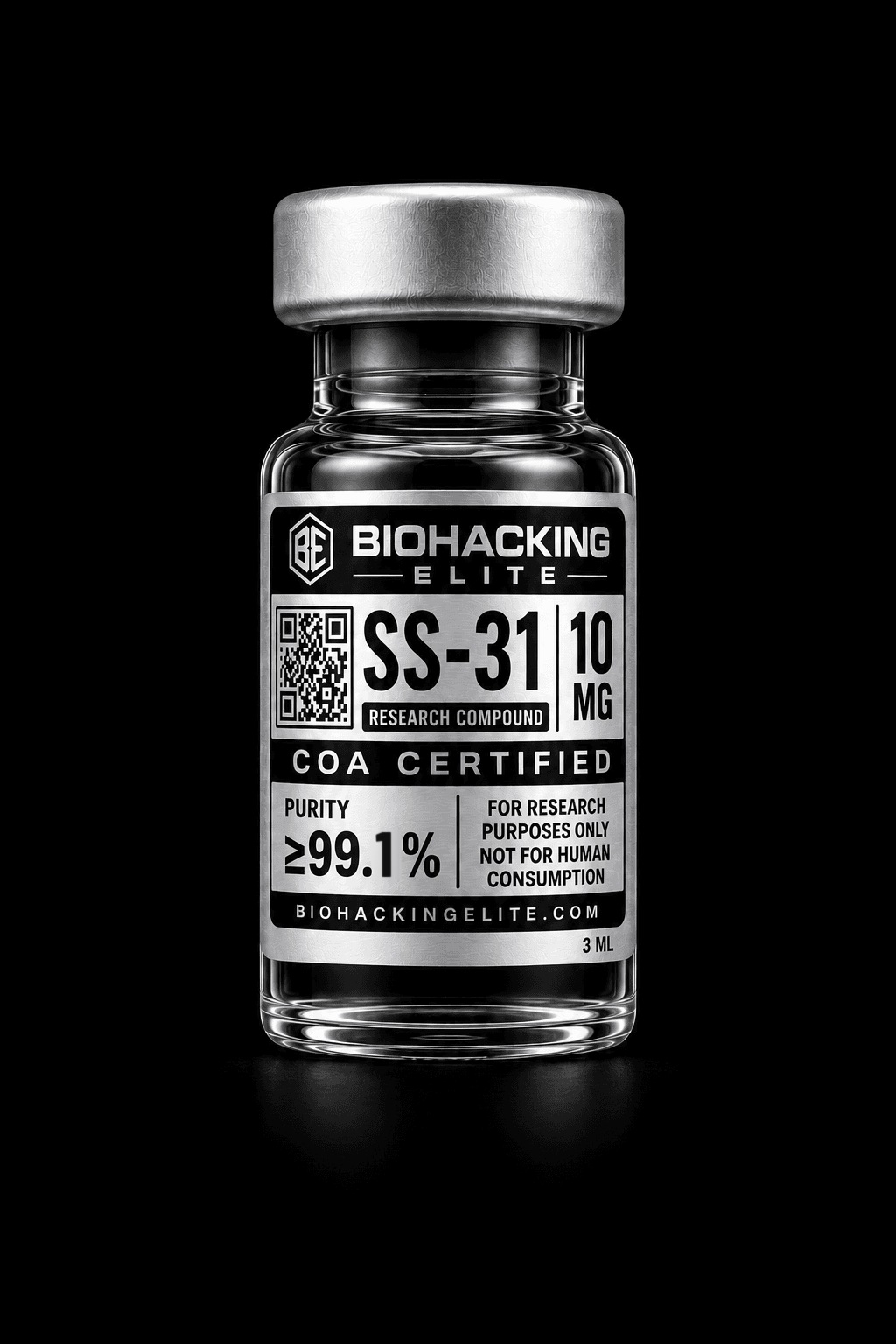
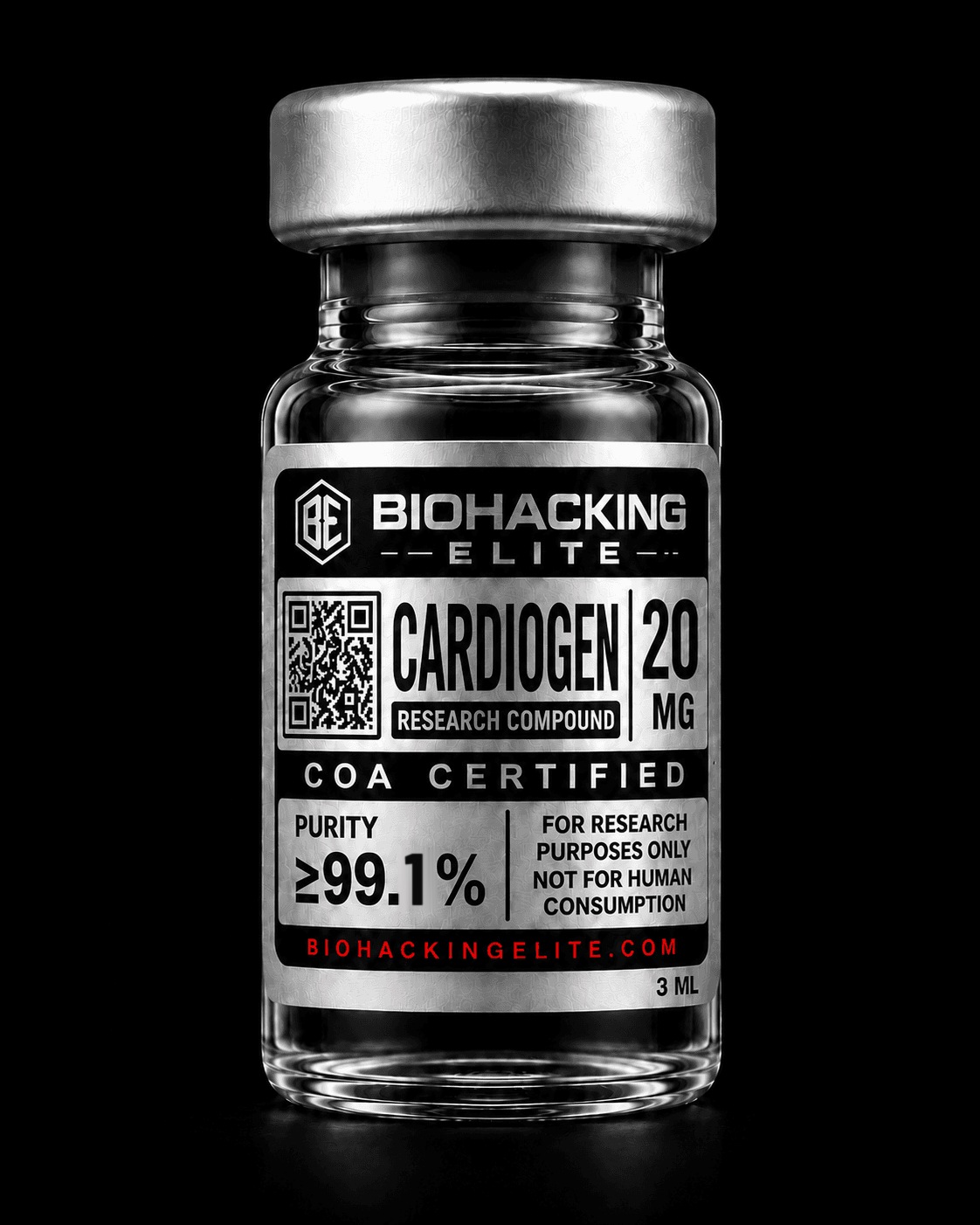
This edition’s Peptide of the Week is SS-31 10mg, and its Bioregulator of the Week is Cardiogen 20mg. Both are currently in stock as members-only research products. The overviews below separate approved-medicine data, human studies, and laboratory or animal work. They do not imply that research-use products are approved, safe, or effective for human use.
FDA Watch
FDA requires NAION warnings on approved GLP-1 receptor agonist medicines
On November 9, 2026, FDA issued a Drug Safety Communication stating that it is requiring application holders for all GLP-1 RA medications to add information about a potential increased risk of NAION to the Warnings and Precautions section of labeling. FDA describes NAION as a rare condition that can result in acute, painless decreased vision in one eye, including permanent vision loss. FDA’s table of affected approved products includes semaglutide (Ozempic, Rybelsus, Wegovy), tirzepatide (Mounjaro, Zepbound), liraglutide, dulaglutide, exenatide, lixisenatide combinations, and orforglipron (Foundayo).
What FDA found (human data). FDA said it began a broader review after a 2024 observational study (Hathaway et al., JAMA Ophthalmology, PMID 38958939). In a meta-analysis of 126 randomized controlled trials with 134,253 patients, FDA identified 15 probable NAION events: 10 in GLP-1 RA-treated patients and 5 in placebo-treated patients. That corresponds to 6.4 versus 3.8 events per 100,000 person-years. In FDA’s Sentinel cohort study, the increase in risk was not statistically significant compared with SGLT-2 inhibitors (hazard ratio 1.19; 95% CI 0.91 to 1.54), but an increased risk was observed compared with DPP-4 inhibitors (hazard ratio 1.43; 95% CI 1.02 to 2.01). FDA’s review of animal data did not identify a mechanism. FDA concluded that there is a potential increased risk of rare NAION events.
FDA advises patients to contact a health care professional right away about sudden, painless vision loss or other sudden visual changes in one eye. This communication concerns FDA-approved medicines. It is not a statement about unapproved or research-use compounds.
FDA warning letter to a Chinese API manufacturer supplying compounding (allegations)
FDA posted a warning letter dated November 3, 2026 to Nanjing Hanxin Pharmaceutical Technology Co. Ltd., a registered manufacturer of active pharmaceutical ingredients (APIs). FDA’s letter says the APIs are intended for further processing into sterile drug products and for pharmaceutical compounding. It alleges significant deviations from current good manufacturing practice (CGMP), including failure to adequately qualify suppliers of critical raw materials. The letter also states that one API listed under the firm’s registration, whose name is redacted, “is not an API permissible for use in human drug compounding under sections 503A or 503B.” FDA placed the firm’s drugs on Import Alert 66-40 on June 22, 2026.
A warning letter sets out FDA’s allegations and gives the firm a chance to respond. It is not a court finding. Product names in the letter are redacted, and the letter does not identify any peptide.
Each item is labelled by evidence type. Results from approved or investigational medicines in clinical trials do not apply to research-use products.
REDEFINE 9: lower-dose CagriSema in adults with overweight or obesity (human randomized trial)
A phase 3b randomized, double-blind, placebo-controlled trial published online November 14, 2026 in The Lancet Diabetes & Endocrinology tested two dose levels of co-administered cagrilintide and semaglutide (CagriSema) that are lower than those used in earlier phase 3 studies. The trial enrolled 309 adults without diabetes across 24 sites in Canada, France, Germany, the UK, and the USA, and ran for 68 weeks. Using the efficacy estimand, mean body-weight change at week 68 was -20.7% and -21.0% with the two CagriSema dose levels, compared with -2.0% with pooled placebo. Adverse events were reported in 99%, 95%, and 91% of participants in the three groups, mostly mild or moderate and gastrointestinal. No deaths were reported. The trial was funded by Novo Nordisk.
CagriSema is investigational in this trial. FDA states that cagrilintide is not a component of any FDA-approved drug, has not been found safe and effective for any condition, and cannot be used in compounding under federal law (FDA).
Retatrutide phase 3 results in obstructive sleep apnea and knee osteoarthritis pain (human randomized trials)
Two Eli Lilly-funded papers in the New England Journal of Medicine report phase 3, double-blind, placebo-controlled results for retatrutide, an investigational triple agonist of GIP, GLP-1, and glucagon receptors. In adults with moderate-to-severe obstructive sleep apnea and obesity or overweight (TRIUMPH-1-OSA, 243 participants; TRIUMPH-2-OSA, 448 participants with type 2 diabetes), retatrutide produced significantly greater reductions in the apnea-hypopnea index than placebo at 80 weeks. The most common adverse events were gastrointestinal (NEJM, October 21, 2026).
In adults with painful knee osteoarthritis and obesity (TRIUMPH-4, 445 participants; TRIUMPH-1-OA, 574 participants), retatrutide produced significantly greater reductions in WOMAC pain scores and body weight than placebo. In both trials, serious adverse events were more common with retatrutide than with placebo (NEJM, November 8, 2026). Lilly summarized these data again at ObesityWeek on November 14, 2026. This newsletter cites the peer-reviewed papers rather than the company release.
Retatrutide is not FDA-approved. FDA states that it cannot be used in compounding under federal law. FDA also says it has warned companies that sold unapproved drugs, including retatrutide, “falsely labeled ‘for research purposes’ or ‘not for human consumption'” directly to consumers for human use (FDA).
A systematic review and meta-analysis in Frontiers in Oncology pooled 30 controlled studies (25 randomized trials and 5 nonrandomized studies; 2,514 participants) of thymosin preparations added to anticancer therapy in colorectal cancer. Postoperative randomized trials reported higher circulating immune indices, such as CD4 percentage and NK-cell percentage. The authors rated certainty as low or very low and concluded that current evidence “is insufficient to support routine clinical use.”
Note on terminology: this review covers thymosin alpha-1-type preparations (thymalfasin and thymopentin). It does not cover thymosin beta-4 or TB-500, and its findings should not be applied to them.
The listings below describe registered studies. A trial listing is not a result, an endorsement, or evidence that a product is approved or effective. No results are reported here unless a study has posted them.
SHAPE: Phase 2a pilot of elamipretide in older adults (NCT07275424)
The University of Washington, with Stealth BioTherapeutics Inc. as collaborator, lists an open-label, single-arm Phase 2a pilot of daily subcutaneous elamipretide in adults aged 65 to 80. Planned enrollment is 30 participants, and the primary outcome is safety and tolerability over four weeks. ClinicalTrials.gov still lists the study as recruiting, with an estimated primary completion date of March 15, 2026. The record was last updated December 10, 2025, so the listed status may be out of date. No results have been posted. The study uses an investigational clinical supply of elamipretide and does not evaluate research-use SS-31 products.
Oral NAD+ supplement absorption and safety study (NCT07692633)
An industry-sponsored (Reus Research) randomized, placebo-controlled study of an oral NAD+ dietary supplement in healthy adults aged 40 to 65 is recruiting at KGK Science Inc. in London, Ontario. Estimated enrollment is 80, and the primary outcome is change in whole-blood NAD+ levels at day 56. The record was updated November 13, 2026. No results have been posted. This is an oral supplement study and does not evaluate any research-use product.
Scientific identity. SS-31 is a mitochondria-targeted peptide, also known as elamipretide. The same active ingredient is in Forzinity (elamipretide) injection, an FDA-approved prescription medicine made by Stealth BioTherapeutics Inc. The Biohacking Elite research product featured here is not Forzinity, is not that approved medicine, and is not FDA-approved for any use.
What researchers are studying. FDA states that Forzinity works by binding to the inner part of the mitochondria, improving mitochondrial structure and function. A 2026 Trends in Pharmacological Sciences article profiles elamipretide as a mitochondria-targeting drug (PMID 42448476). In laboratory and animal research, a 2026 Circulation: Heart Failure study in a rat model of heart failure with preserved ejection fraction reported that 12 weeks of elamipretide was associated with better skeletal-muscle contractile function and markers related to cardiolipin (PMID 42290373). That is animal research. It does not show effects in people and is not a claim about the research-use product in this catalog.
Human evidence (kept separate). Elamipretide (the approved-drug molecule, not this research product) has been studied in humans in clinical trials (MMPOWER-3, PMID 37268435; FDA approval announcement). On September 19, 2025, FDA granted accelerated approval to Forzinity as the first treatment for Barth syndrome in patients weighing at least 30 kg, based on improved knee-extensor muscle strength. FDA is requiring a confirmatory randomized, placebo-controlled trial. FDA reported that the most common side effects in trials were mild-to-moderate injection-site reactions and that serious reactions have also been reported (FDA, September 19, 2025). Outside Barth syndrome, the Phase 3 MMPOWER-3 randomized trial in 218 adults with primary mitochondrial myopathy did not meet its primary endpoints. The six-minute-walk difference versus placebo was -3.2 meters (p=0.69) (Neurology 2023, PMID 37268435). The SHAPE pilot in older adults, listed above, has not posted results.
Limitations, unknowns, and regulatory status. Accelerated approval is not traditional full approval, and confirmatory evidence of patient benefit in Barth syndrome is still required. A large Phase 3 trial in another mitochondrial condition was negative. Long-term safety and usefulness outside the approved indication remain open questions. A laboratory research material sold as SS-31 has not been reviewed by FDA as a medicine and is not a substitute for the approved drug. It is sold for research use only and is not for human consumption.
HHS six-peptide 503A policy: comment period closes; stakeholders split
The comment period on HHS’s draft “Enforcement Discretion Policy Regarding 503A Compounding Using Certain Peptide Bulk Drug Substances” (Federal Register, October 30, 2026; Docket HHS-OASH-2026-0496) closed at 11:59 PM ET on November 13, 2026. The regulations.gov docket showed 115 posted comments when checked on November 15. This newsletter has not reviewed how those comments divide. HHS has not said when or how it will respond. Because the notice is a draft, a revised, finalized, or withdrawn version is possible.
Positions filed or published in the final week (these are the organizations’ arguments, not findings):
American Medical Association: In its November 13 advocacy update, the AMA said it urged HHS to rescind the policy, arguing that allowing these substances in compounding “exposes patients to unnecessary risks.” The AMA also said it will urge state medical and pharmacy boards to pursue enforcement against compounders, direct-to-consumer telehealth platforms, and online dispensaries.
Endocrine Society and co-signers: A joint letter dated November 13 says the signers “strongly oppose” the draft policy, citing risks of contaminated injections, dosing errors, and inadequately studied treatments.
Alliance for Pharmacy Compounding and National Community Pharmacists Association: A joint comment letter dated November 13 supports the pathway. It says FDA establishment registration “is not itself proof” that a given API lot complies with the policy or that its certificate of analysis is accurate. For an initial period of one year, subject to review, it recommends that 503A pharmacies obtain the covered APIs through FDA-registered U.S. repackagers or relabelers that verify each lot.
The policy, if adopted, applies only to state-licensed pharmacies, federal facilities, and licensed physicians compounding under section 503A. It is not FDA approval, does not add these peptides to the 503A bulks list, and does not cover research-use-only products.
CDC: about 1 in 10 U.S. adults used a GLP-1 medication in the past year
A CDC report in Morbidity and Mortality Weekly Report (November 12, 2026; 75(44):645-651) used Rapid Surveys System data collected in July and August 2025. An estimated 9.8% of U.S. adults reported taking a GLP-1 medication in the past year. Among those users, 22.6% reported taking a compounded version. About two in five users reported changing how they took the medication compared with how it was prescribed, for example by skipping doses, taking less, or delaying fills, and often cited cost and availability. CDC notes that compounded GLP-1 medications are not reviewed by FDA for safety, effectiveness, or quality before they are marketed. These are cross-sectional, self-reported survey data.
The News & Research section is being prepared at biohackingelite.com/news-research/ (planned; not yet live). The explainers below are drafts and have not been published. Live editions will link only after an article is live.
Coming soon
HHS Six-Peptide 503A Policy: Comment Period Closes With 115 Posted Comments as Medical and Pharmacy Groups Split
Coming soon
FDA Requires NAION Warnings on Approved GLP-1 Receptor Agonist Medicines
Coming soon
CDC Survey: About 1 in 5 Recent GLP-1 Users Reported Taking a Compounded Version
Bioregulator of the Week
Cardiogen 20mg
Members-only research product | Currently in stock | For research use only, not for human consumption
Scientific identity. Cardiogen is a synthetic tetrapeptide from the short-peptide “bioregulator” research tradition associated with the St. Petersburg Institute of Bioregulation and Gerontology. A 2026 review from that institute identifies “Cardiogen” as the tetrapeptide AEDR (Ala-Glu-Asp-Arg) (Advances in Gerontology, PMID 42935327). Cardiogen is not an FDA-approved medicine.
What researchers are studying (laboratory and animal evidence). The 2026 review, published in Russian with an English abstract, summarizes experimental studies. It reports that in animal models AEDR was associated with preserved cardiomyocyte viability after coronary-artery ligation, reduced signs of calcium chloride-induced arrhythmia, lower lipid peroxidation, and less adrenaline-induced myocardial dystrophy. A 2023 computational (in silico) study modeled how 26 short peptides, including AEDR, might bind to the LAT and PEPT families of cellular transporters (Biomolecules, PMID 36979488). Both are preclinical work, and both papers come from the same St. Petersburg research network. Independent replication is limited.
Human evidence. For this edition, searches of PubMed for “AEDR peptide” and “Ala-Glu-Asp-Arg” did not identify a peer-reviewed human study of this tetrapeptide. No human-use statement is made here.
Limitations, unknowns, and regulatory status. It is unknown whether the animal and cell findings would be reproduced in independent, well-controlled studies. Pharmacokinetics, stability, and long-term safety in humans have not been established in the literature reviewed for this edition. The Biohacking Elite Cardiogen 20mg product is a members-only research material sold for laboratory research use only. It is not for human consumption and is not a dietary supplement or medicine.
Source disclosures. Items in this edition were drawn from official regulator and government publications (FDA, CDC, the Federal Register, and regulations.gov), from organizations’ own published letters (AMA, Endocrine Society, APC/NCPA), and from indexed scientific literature (PubMed and ClinicalTrials.gov). Links go to those original sources. Official actions are distinguished from organizational positions and from unpublished article drafts. Allegations in FDA warning letters are allegations, not findings. A citation is not an endorsement of a product, a treatment, or any conclusion beyond what the source itself states.
Research-use-only notice
Products featured in this newsletter are sold for laboratory research use only and are not for human consumption. They are not dietary supplements, are not medicines, and are not approved by the FDA for the diagnosis, treatment, cure, or prevention of any disease. Discussion of laboratory, animal, or human research, or of an FDA-approved medicine that contains a related active ingredient, does not mean that a research-use product is safe, effective, or approved for human use. This newsletter is for informational purposes only and is not medical advice, a diagnosis, or a recommendation to use any substance. Consult a licensed clinician for personal medical questions.
You are receiving this because you subscribed to Biohacking Elite updates or have a Biohacking Elite account. Every emailed edition includes an unsubscribe link, added automatically by our email service (WordPress.com / Jetpack Newsletter) at the bottom of the message. To unsubscribe at any time, use that link, or email us at Biohackingelite@pm.me and we will remove you.